
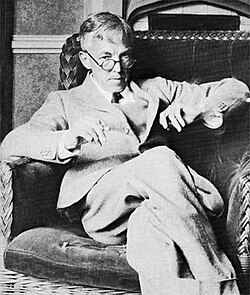
G. H. Hardy was among the leading English pure mathematicians of the early twentieth century renowned particularly for his contributions to analysis and number theory. He graduated from Trinity College, Cambridge in 1899. He was elected as a fellow the following year and taught mathematics there from 1906 until 1919.
In 1912 Hardy began his famous collaboration with John E. Littlewood, producing a series of influential papers that shaped many areas of modern mathematics. Their work addressed problems in Diophantine analysis, Fourier series, divergent series, the Riemann zeta function and the distribution of prime numbers. The Hardy–Littlewood partnership is widely regarded as one of the most important mathematical collaborations of the twentieth century. Hardy’s other celebrated collaboration was with Srinivasa Ramanujan, a largely self-taught Indian mathematician whose remarkable ability Hardy quickly recognized. He arranged for Ramanujan to travel to Cambridge in 1914, guided his mathematical development and co-authored several significant papers with him before Ramanujan’s return to India in 1919.
Hardy was appointed as the Cayley Lecturer at Cambridge in 1914 and in 1919, became Savilian Professor of Geometry at the University of Oxford. During 1928–29 he served as a visiting professor at Princeton University exchanging posts with Oswald Veblen. In 1931 he returned to Cambridge as Sadleirian Professor of Pure Mathematics, a position he held until his death.
Despite his strong aversion to applied mathematics, Hardy made a notable early contribution beyond pure theory. In 1908, independently of the German physician Wilhelm Weinberg, he formulated what is now known as the Hardy–Weinberg law, which explains how dominant and recessive genetic traits persist in large populations. Although Hardy himself regarded this result with little enthusiasm, it became a cornerstone of population genetics.
Throughout his career, Hardy authored or co-authored more than 300 papers and 11 books. His most influential works include A Course of Pure Mathematics (1908) which transformed university mathematics education, Inequalities (1934), written with Littlewood; The Theory of Numbers (1938), coauthored with E. M. Wright and Divergent Series (1948). His essay A Mathematician’s Apology (1940)-a personal reflection on the nature of mathematical creativity remains widely read. Hardy received numerous honours including election to the Royal Society in 1910. Hardy served as president of the London Mathematical Society from 1926 to 1928 and again from 1939 to 1941.
 '
'