

Central Workshop:
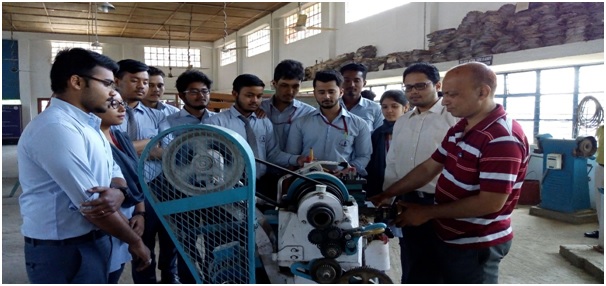
The Manufacturing Practice and Workshop Laboratory is utilized by first-year students of all engineering disciplines for the courses Manufacturing Practice & Workshop–I and Manufacturing Practice & Workshop–II. The laboratory provides students with hands-on training in fundamental manufacturing and fabrication processes, including Welding, Turning, Fitting, Carpentry, and Blacksmithy. It is well-equipped with a wide range of conventional workshop machines and equipment, such as centre lathes, shapers, milling machines, drilling machines, shearing machines, and welding units (Arc, Gas, and MIG welding). The laboratory enables students to develop practical skills, understand manufacturing processes, and gain essential workshop experience required for their engineering education. The Central Workshop also serves as a facility for final-year students to carry out the fabrication, assembly, and testing of their major project work.
Engineering Mechanics Laboratory:
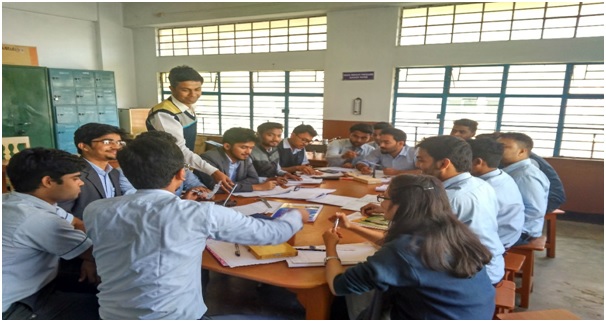
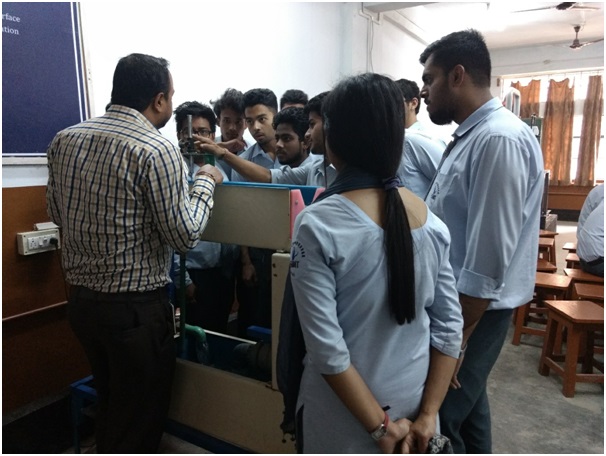
The Engineering Mechanics Laboratory is primarily utilized by second-year Mechanical Engineering students to perform experiments related to the fundamentals of engineering mechanics. The laboratory enables students to verify theoretical concepts through practical experiments such as the Polygon Law of Forces, Parallel Law of Forces, Determination of the Centre of Gravity of Various Sections, Moment of Inertia, and Coefficient of Friction. The laboratory is equipped with apparatus including the Moment of Force Apparatus, Coefficient of Friction Apparatus, Parallel Force Apparatus, and other experimental setups that facilitate experiential learning.
Kinematics & Dynamics of Machines Laboratory:
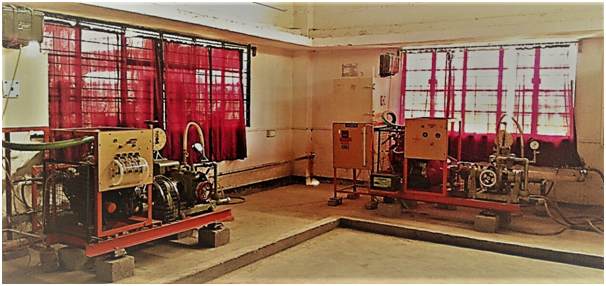
The Kinematics and Dynamics of Machines Laboratory provide practical exposure to the study of mechanisms and machine elements. The laboratory houses working models of various mechanisms, governors, cams and followers, gyroscopes, balancing machines, worm and worm wheel drives, gear trains, belt drives, screw jacks, and winch crabs. These models help students understand the kinematic and dynamic behavior of mechanical systems.
Engineering Materials and Application Laboratory:
The Engineering Materials and Applications Laboratory is equipped with a 1000 kN Universal Testing Machine (UTM) procured under the AICTE-MODROB scheme, supporting both academic experiments and research activities. The laboratory facilitates testing of the mechanical properties of engineering and locally available building materials. This laboratory also includes a Hardness Testing Machine, Impact Testing Machine, Torsion Testing Machine, Fatigue Testing Machine, and Flexural Testing Apparatus. The laboratory is extensively used for undergraduate practical courses, student projects, and research work.
Machining and Machine Tools Laboratory:
The Machining and Machine Tools Laboratory provides practical training in conventional machining processes such as turning, facing, taper turning, milling, shaping, surface grinding, and MIG welding. These machining operations are carried out using facilities available in the Central Workshop, which is equipped with lathes, milling machines, shapers, grinding machines, and welding equipment, enabling students to acquire essential manufacturing skills.
Measurements and Metrology Laboratory:
The Measurements and Metrology Laboratory familiarize students with precision measurement techniques and quality control practices. The laboratory is equipped with a variety of measuring instruments, including gauges, planimeter, stroboscope, bevel protractor, dial indicators, and other precision measuring devices. These facilities help students develop practical skills in dimensional measurement, inspection, and metrology, which are essential in manufacturing industries and research.
CAD Laboratory:
The CAD Laboratory provides facilities for computer-aided design and drafting using industry-standard software. The laboratory is equipped with Creo 5.0 for three-dimensional solid modelling, assembly, and product design, along with AutoCAD for engineering drafting and detailing. These software packages enable students to develop design, modelling, and visualization skills required in modern mechanical engineering practice.
Advanced Manufacturing Laboratory:
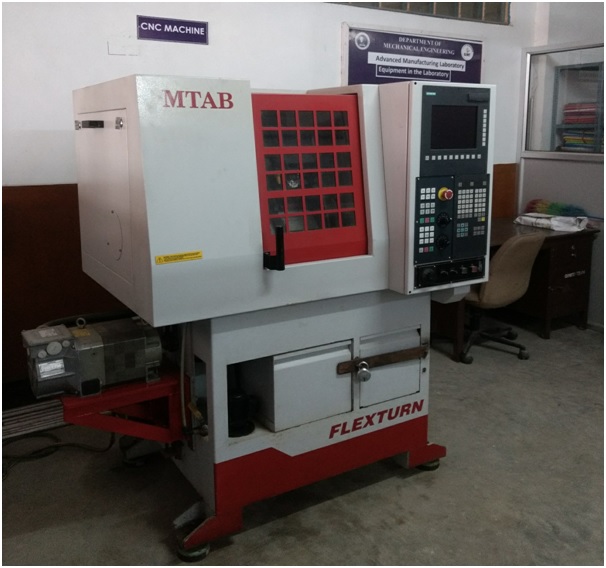
The Advanced Manufacturing Laboratory is equipped with a CNC Lathe Machine installed under the AICTE-MODROB scheme. The laboratory provides hands-on training in CNC programming, machining operations, and advanced manufacturing techniques. It also supports undergraduate laboratory experiments, student projects, and research activities in the field of computer-controlled manufacturing.
Fluid Mechanics & Hydraulic Machines Laboratory:
The Fluid Mechanics and Hydraulic Machines Laboratory enables students to conduct experiments related to fluid flow and hydraulic machinery. The laboratory includes experimental setups for the Determination of Metacentric Height, Verification of Bernoulli’s Theorem, Orifice Meter, Notch Apparatus, Vortex Apparatus, and Reynolds Number Demonstration. It also houses working models of hydraulic turbines, including Francis, Kaplan, and Pelton Wheel Turbines. The laboratory provides facilities for undergraduate projects and experimental research undertaken by final-year students.
Heat Transfer Laboratory:
The Heat Transfer Laboratory provides practical exposure to the three modes of heat transfer—conduction, convection, and radiation. Major experimental setups include the Thermal Conductivity Apparatus for metal bars, insulating powders, and liquids, Pin Fin Apparatus, Natural and Forced Convection Apparatus, Emissivity Apparatus, and the Stefan–Boltzmann Apparatus. These experiments help students understand heat transfer principles and their engineering applications.
Other Laboratories:
In addition to the departmental laboratories, first-year Mechanical Engineering students undertake practical courses in Physics, Chemistry, Design Thinking and IDEA Laboratory, Programming for Problem Solving, and Basic Electrical Engineering. Students also attend practical sessions in Communicative Japanese or Communicative Russian as prescribed in the curriculum. These laboratories and language courses provide multidisciplinary exposure and contribute to the holistic development of students.Â
'